


Intercom is the reference point for modern customer messaging, and Fin, its AI agent, is one of the most capable products in the category. It is also priced for a different company than the one most website owners are running. Caretta Assistant answers the same visitor questions and charges per answer, with no seats and no monthly floor.
This comparison is written for the person deciding between them, which usually means someone who read Intercom's pricing page and wondered whether they need all of it. Figures are quoted from both products' own pages as of 23 August 2026.
The short version
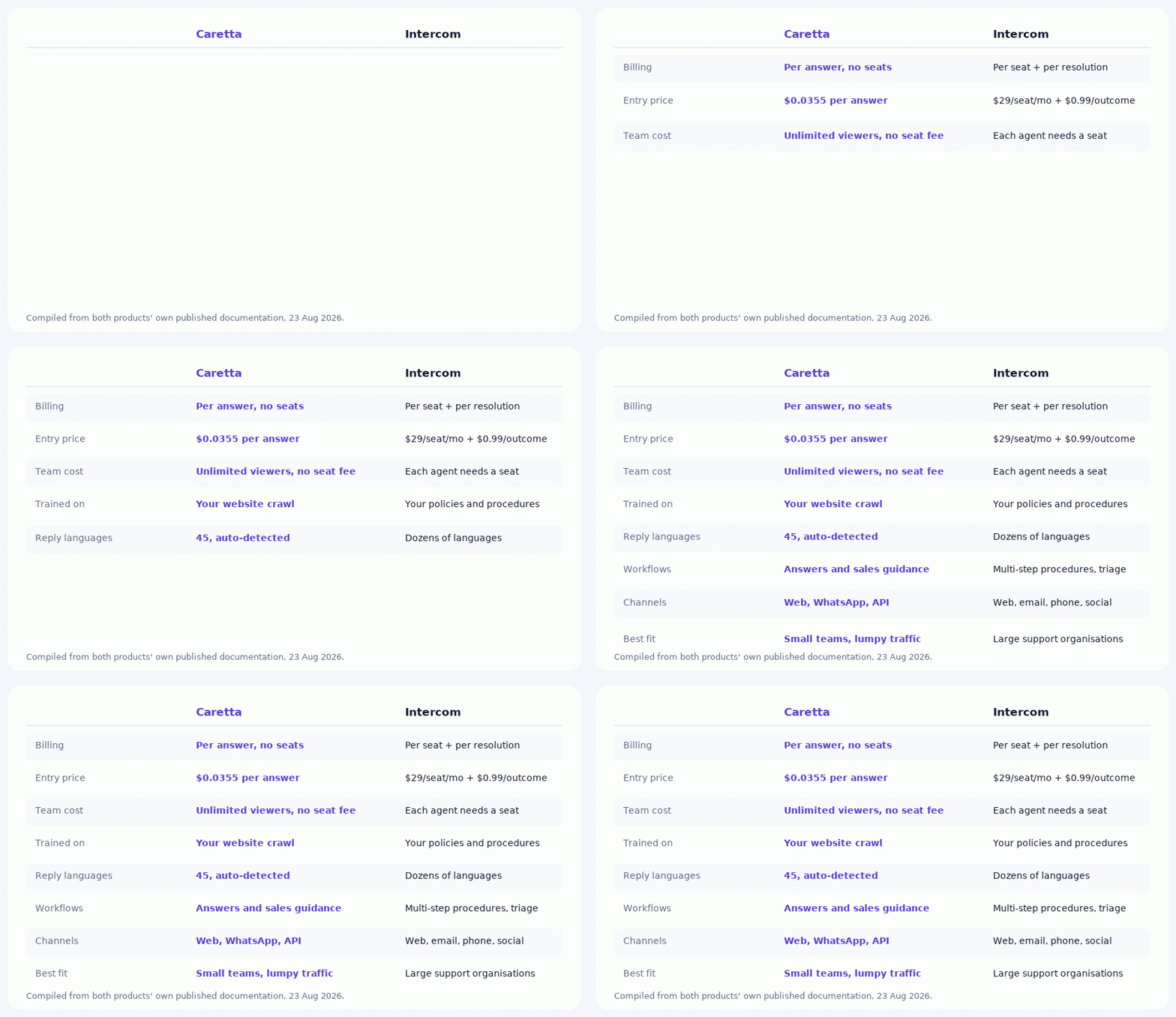
Intercom charges twice: $29 per seat per month at the Essential tier, then $0.99 for each Fin outcome on top. Caretta charges once, $0.0355 per answer, with no seat count at all. Intercom's product is deeper in almost every direction that matters to a support organisation with a real team. Caretta's is narrower and cheaper for a site whose team is one to three people.
Fin is genuinely strong: Intercom publishes a resolution rate "averaging 76% across 12,000+ customers" and Fin handles multi-step procedures, refunds and triage. If your support work involves actions rather than answers, that capability is the whole argument.
Feature by feature
What Intercom does better
It takes actions, not just answers. Fin processes payments and refunds, updates accounts, runs multi-step Procedures and triages conversations to the right team. Caretta answers questions and, with Sales Mode on, recommends products. It does not process a refund for you.
The support organisation around it. Shared inbox, ticketing, SLAs, routing rules, reporting, phone and email channels. This is a decade of product depth and there is no honest way to claim parity.
Published performance data at scale. A 76% average across 12,000 customers is a meaningful number that we cannot match with equivalent evidence.
Handoff is native. When Fin cannot help, the conversation moves to a human inside the same product, with full context. This is the single biggest structural gap on our side, and it is worth being blunt about it.
What Caretta does better
Nobody pays for a seat. This sounds minor until you count. Seat pricing quietly decides who is allowed to see customer conversations: the warehouse lead who could answer a shipping question in four seconds does not get access, because access costs $29 a month. Caretta has no seat concept, so everyone who should see conversations can.
One meter instead of two. With Intercom you are forecasting seats and outcomes together. With Caretta you multiply one number by your question volume.
Cost at small scale. Four hundred answers a month is about $14. The same volume on Intercom Essential with one seat and 400 Fin outcomes would be several hundred dollars at list price. At small volumes this is not a close comparison, which is precisely why the two products suit different companies.
Unsure answers are free, and a daily cap is standard. Both are built in rather than sold as an upgrade.
How differently they talk
Intercom positions Fin as communicating "like your best employee," configured through brand voice, messaging and communication style, all self-service. That is a strong, deliberately corporate framing and it fits the companies Intercom sells to.
Caretta's approach is smaller and more concrete. You name the assistant, describe its personality in a sentence, and choose one of seven speaking tones. Then you watch the same question come back differently.
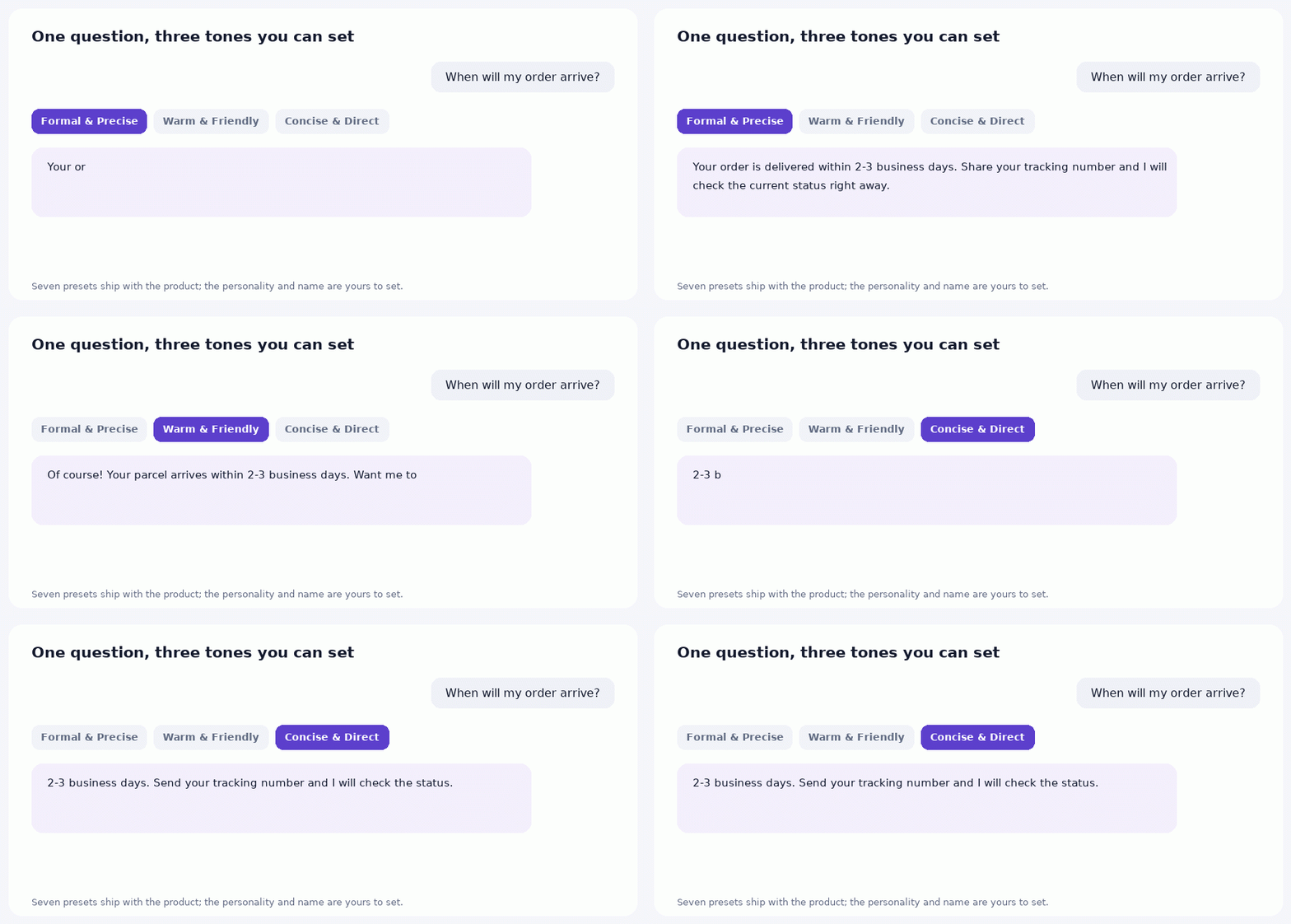
The delivery changes, the facts do not. Both products bind the assistant to supplied content; neither is inventing delivery times. The difference is how much of the personality decision is a written brand-voice document versus a preset you click and immediately hear.
If you run more than one website, the per-site identity matters more than it sounds. A single Caretta account can run a terse, formal assistant on an industrial catalogue and a warm one on a consumer store, each with its own name.
Where each one is the right answer
Choose Intercom if
- You have a support team with several agents and real ticket volume
- Your assistant needs to do things: refunds, account changes, multi-step procedures
- AI-to-human handoff inside a single inbox is essential
- You need phone and email channels alongside chat
- Predictable per-seat budgeting suits your finance process better than usage billing
Choose Caretta if
- Your "support team" is you, or you and one other person
- Most questions are answerable from content already on your website
- You want the cost to fall to nearly nothing in quiet months
- You want everyone in the company to see conversations without buying seats
- You run several sites and want a distinct assistant on each
The honest limits on our side
Caretta has no native human handoff in the public API. The dashboard assistant can escalate to a ticket, but integrators calling the REST API get a low-confidence flag and build their own handoff. There is no shared inbox with SLAs, no phone channel, no routing rules, and no ability to take actions in your billing system. If those matter, Intercom is not the expensive option, it is the correct one.
A note on comparing the two on price
You will find blog posts with a bar chart showing Intercom at several hundred dollars a month next to a competitor at twenty. Read the assumptions before believing the chart, including ours. Producing such a total requires assuming your conversation volume, what share Fin resolves, and how many seats you buy, and small changes in those assumptions move the total by hundreds of dollars. That is why the figures above are per-unit prices quoted from each pricing page rather than a monthly total we invented for you.
Common questions
Is Fin's $0.99 charged per conversation or per question?
Intercom states it is per outcome, once per conversation regardless of how many questions are answered within it. Caretta charges per answer, so a five-message conversation costs about $0.18 with us. At that shape, one long conversation is cheaper with Caretta and one short conversation is closer than the headline rates suggest.
Can Caretta escalate to a human at all?
In the dashboard assistant, yes, with one click to a ticket. Through the API, you get a low-confidence flag and route it yourself. The live chat panel lets you take over a conversation in progress.
Do I need to migrate my help centre content?
No. Caretta trains by crawling your public website, so if your policies are on your site, they are in scope. Content that lives only inside Intercom's help centre would need to be public or added separately.
Which is safer against wrong answers?
Both ground answers in your own material. Caretta declines to bill answers it is not confident about and tells the visitor it is unsure, rather than producing a confident guess.
Check Intercom's pricing page and the live rates on the Caretta Assistant page before deciding, since both change.